About
A gift card that survives contact with the warehouse
GiftLift exists because gift messaging is the easiest thing in the world to sell at checkout and one of the hardest to actually run once the orders start arriving.
The part everyone underestimates
Adding a gift-message box to a checkout takes an afternoon. What it produces is a column of free text in an order export, and somebody downstream has to turn that column into a physical card in the right box.
In practice that means holding stock of a card for every occasion, guessing the mix months ahead of the season, pulling the right one at the pick face, copying a stranger's message onto it in handwriting that is not theirs, and getting it into the correct carton. It works at fifty orders a day. At five hundred it becomes the slowest station on the line. At five thousand the feature quietly gets switched off, or it gets replaced by one generic card with the brand's logo on it that nobody reads.
So the option is either expensive, or it is not really the thing that was promised.
What GiftLift does about it
It moves the card from the pick face to the printer. Your customer chooses the occasion and the design and writes the message at checkout. That message travels with the order as a token rather than as text on a pick list. When the carton is packed, the card prints — full color, 5 × 7 inches, at 300 dpi, with the message set into the artwork in a handwriting face — and goes in with everything else.
Nobody holds stock. Nobody transcribes anything. There is no occasion to forecast, because a design that is not chosen is never printed. And the card cannot end up in the wrong box, because it is not made until the box it belongs to is in front of the printer.
Where it comes from
GiftLift is a product of UnDigital, in Hunt Valley, Maryland. UnDigital's business is in-package print: hardware and software in fulfillment centers that print what goes in the box, per order, at the moment it is packed, off whatever the brand knows about that customer.
Most of that platform is used for marketing inserts — the offer that matches what someone actually bought, rather than the flyer that was printed six weeks ago for everybody. GiftLift is the same machinery pointed at something the customer asks for and pays for instead of something the brand wants them to read.
That lineage is the reason the integration is a script tag rather than a project. The print side already existed and already worked at volume; what GiftLift added was the twenty seconds at checkout where someone decides they want a card.
The specifics
-
5 × 7
Inches, full color
Printed at 300 dpi. Card-shaped, not receipt-shaped — it is meant to be kept, and some of them are.
-
27
Designs, ten occasions
Illustrated, each laid out with its own message area. See all of them, or print your own.
-
12%
Take the option
Across GiftLift brands, roughly one customer in eight adds a card when it is offered, at an average $4.04 lift per gift order.
-
0
Extra parcels
The card ships inside the carton the order was already going in. No second shipment, no second delivery charge.
On the card itself
A gift message is somebody telling their mother they were thinking of her. It is worth more than eight-point Helvetica on a thermal packing slip, which is the standard it is usually held to.
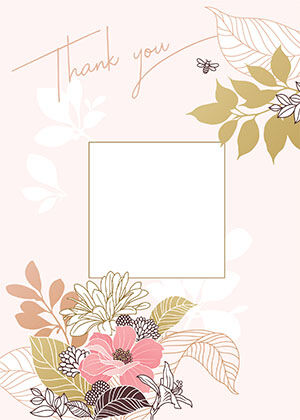
So the library is illustrated rather than templated, every design reserves real space for the message instead of leaving it to fall where it lands, and the message is set in a handwriting face at a size the layout was actually drawn for. A long note on a busy card does not run over the artwork, because the box it goes in was measured for that card and not for cards in general.
None of that is difficult. It is just the part that gets skipped when the card is an afterthought.
Have a look at it running on your own checkout before you decide anything.
Book a demo